Skip to content Launch offer: Valvex Live for $29 until January 20, 2027. Then, $49.Live for $29 at launch ($49 afterwards). Get Live
VALVEX
EN
Free download

Why Valvex

Leave the amp at home.

A tube amp, two 4x12 cabinets, 28 pedals and your captures on a Windows laptop. What used to weigh over fifty kilos (110 lb) and reach the desk differently in every room now fits in a backpack and reaches it the same way everywhere.

1 · Portable

Your whole rig in a backpack

Your laptop, an audio interface and your MIDI foot controller. No head, no 4x12, no pedal power supply and no tangle of cables: it fits in your carry-on, on the bus or in anyone's car.

And on the road there are no tubes to break with a knock, and no amp that can't take another country's mains voltage: almost any laptop charger takes 100 to 240 V.

2 · Always the same

Straight to the desk, the same in every room

The signal leaves with its amp, its cabinet and its microphone already in it, and goes straight to the mixing desk. It doesn't depend on how they mic your cab, which microphone is around that night or whether your amp on stage muddies the mix.

With your interface and your settings, what reaches the desk is exactly the sound you dialed in at home, in a bar, a church or a festival.

3 · No pedals to buy

Every sound in the setlist

The amp's two channels, LEAD and CLEAN; your NAM captures of any amps you like; up to ten pedals at once, five before and five after the amp, picked from 28 and in any order; two 4x12 cabinets with three microphones and your own impulses. Changing a pedal doesn't mean buying one or rewiring anything.

With Live, 25 complete sounds in five banks, switched with your foot without cutting off the note you're playing.

4 · Automatic

Let the song change the sound for you

If you play to a click or backing tracks, your DAW changes the sound on the exact bar while you just play and sing: by automating any knob or pedal, and with Live, by calling up whole sounds over MIDI. The delay and the tremolo can lock to the session tempo.

With Live, any knob or pedal is tied to your controller with a right-click and a stomp: the wah to your expression pedal, the solo to one switch, the tuner to another.

5 · Silent

Silent stage, clean in-ears

Without an amp booming on stage, the stage volume drops at once. The engineer builds a clear mix for your in-ears, the vocal mics don't fill up with guitar and there's less risk of feedback.

And your ears thank you after every show.

6 · With a backup

A plan B that fits in your bag

The license goes with you, not with the computer: install it on your laptop and on a backup one, and copy your sounds to both. If something fails before the show, you swap computers and keep sounding the same.

No account and no internet: it works in the bar basement where there's no signal.

Where it helps

Every stage has its problem.

And it's nearly always the same one: the gear is heavy, the room calls the shots and the volume gets in the way. This is what changes in each place you play.

On tour and traveling

Flights, buses and vans

Paying excess baggage, crossing your fingers that the head arrives in one piece and making do with whatever there is in each city.

Your whole rig travels with you in the backpack, with a backup laptop if you like, and sounds the same on the first date as on the last.

Free · better with Live

Bars and small venues

"Turn that amp down"

Little room on stage, an owner asking for low volume and a drive sound that only works with the amp cranked.

The desk sets the volume, not your amp: the drive sounds just as fat at any level. And you set up in minutes by plugging the interface into the console.

Free · better with Live

Churches and worship

Low volume and volunteer engineers

A stage kept at moderate volume, everyone on in-ears and a different person at the desk every Sunday.

A silent stage, a signal that reaches the desk ready to go with nothing to mic, and the same sound every service. With Live, the service's sounds on your foot controller, laid out in banks, and you switch with your foot.

Free · better with Live

Weddings, events and covers

Forty songs, one rig

A long setlist that jumps from a ballad's clean to a rock classic's drive, and little time to load in and out.

25 complete sounds a stomp away, usually enough for the whole setlist because songs share cleans, crunch and lead sounds. You switch mid-song without a gap.

Live

Festivals and shared backline

Fifteen-minute changeovers

Little time to set up, a borrowed amp you don't know and an engineer miking in a hurry.

There's no cab to mic: it goes straight into the DI box. And if the backline has a cab and a power amp, or an amp with an effects return, Live's no-cab output uses them without changing what reaches the desk.

Free · better with Live

Rehearsals

The room has the amp it has

The tired combo in the rehearsal room, which sounds nothing like you do at the show.

You bring your real sound to rehearsal. And if the band rehearses silently on headphones, the guitar goes into the mix like any other instrument.

Free · better with Live

At home, any time

Neighbors, kids and apartments

A tube amp only sounds good loud, and loud in an apartment at eleven at night isn't an option.

On headphones you play with a concert sound without anyone noticing, and you practice with the same rig you'll take on stage.

Free

Recording

Choosing the sound before tracking

With an amp, the sound is printed forever: if it doesn't fit the mix, you track it again or reamp it.

Record the guitar clean and choose the amp, the cabinet and the pedals afterwards, right up to mix day. The same sound on the record and live, royalty-free.

Free

Streaming and content

From clean to solo, live on air

Changing sounds mid-stream by reaching for the mouse, with a dropout everyone hears.

You switch with your foot, without a dropout, and the sound reaches your streaming software clean, with no mic in a bedroom.

Live

Head to head

Amp and pedals versus Valvex.

It's not that the amp sounds bad: it's everything it takes to make it sound good every night.

 Amp and pedalsValvex
What you carryHead, cab, pedalboard, power supply and cables: easily over 50 kg (110 lb)A laptop, an interface and your MIDI foot controller
Setting upWiring the board, placing the cab and waiting for it to be mikedThe interface into the mixing desk
From room to roomChanges with the mic, where it's placed and the stage volumeReaches the desk exactly as you rehearsed it
How many soundsAs many as fit on the boardAs many as you dial in, and 25 saved a stomp away with Live
Stage volumeLoud, or the drive doesn't happenSilent, and it sounds the same
On a tripFragile tubes, weight and different mains voltagesGoes in your carry-on
If something failsA second ampA second laptop, with the same license
What it costsAn amp, a cab and a pedalboardFree, and Live for $29 once, with the laptop and interface you already have

IMPRINT

Your favorite pedal, right on the board.

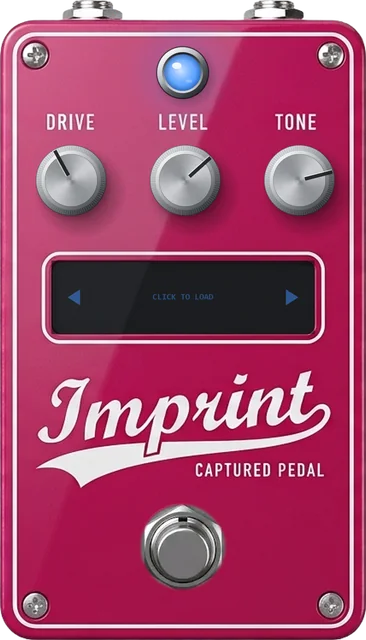
Is there a pedal you'd never trade, or a capture of one you love? IMPRINT loads its NAM capture and turns it into one more pedal, with its own Drive, Tone and Level. It sounds right in front of the amp, which is where a drive goes, with the rest of the board before it.

  • Take it on tour without taking it: the pedal stays home and its sound travels on your laptop.
  • There are plenty of pedal captures to download, or you can capture your own.
  • It comes in the free version, and two arrows step from one capture to the next.
IMPRINT, the pedal that loads NAM pedal captures.

Made in Colombia

The first amp sim made in Colombia.

Valvex is a pioneer: it was designed and programmed by a Colombian guitarist, for guitarists who play in front of people. As far as we could find, there is no other commercial amp simulator made in Colombia.

Approved by playing

Every sound change was approved guitar in hand, compared at matched volume, and undone when it didn't convince. The ear decides, not a sheet of measurements.

With its own identity

Its own two-channel amp, two exclusive 4x12 cabinets and 28 pedals with their own names and designs.

In your language

The website and the license in English, Spanish and Portuguese: for Latin America, Brazil and the rest of the world.

Before you leave the amp

What you need.

Said plainly, so nobody gets a surprise at soundcheck.

  • A laptop with Windows 10 or 11, 64-bit, and a processor with AVX2: almost any from the last ten years. On a laptop with a 2019 Core i5, the factory rig uses about 9 % of a core, and about 20 % with a NAM capture.
  • An audio interface to plug in the guitar and send the signal to the desk or your headphones.
  • Your DAW, or nothing else: Valvex runs as a standalone app and as a VST3 plugin.
  • Something to hear it through: the venue's desk, a powered monitor or your headphones. Valvex has no speaker of its own: it sounds wherever you send the interface.
  • For the stage, a MIDI foot controller, over USB or Bluetooth, and the Live license.
  • There is no Mac or iPad version yet.

Try it where you play

Your next show, in a backpack.

Download the free version, build your sounds and take it to rehearsal. When you step on stage, Live unlocks inside the same program.

Valvex runs as a standalone app, with ASIO® for low-latency playing, and as a VST3 plugin inside your DAW. ASIO is a registered trademark of Steinberg Media Technologies GmbH.